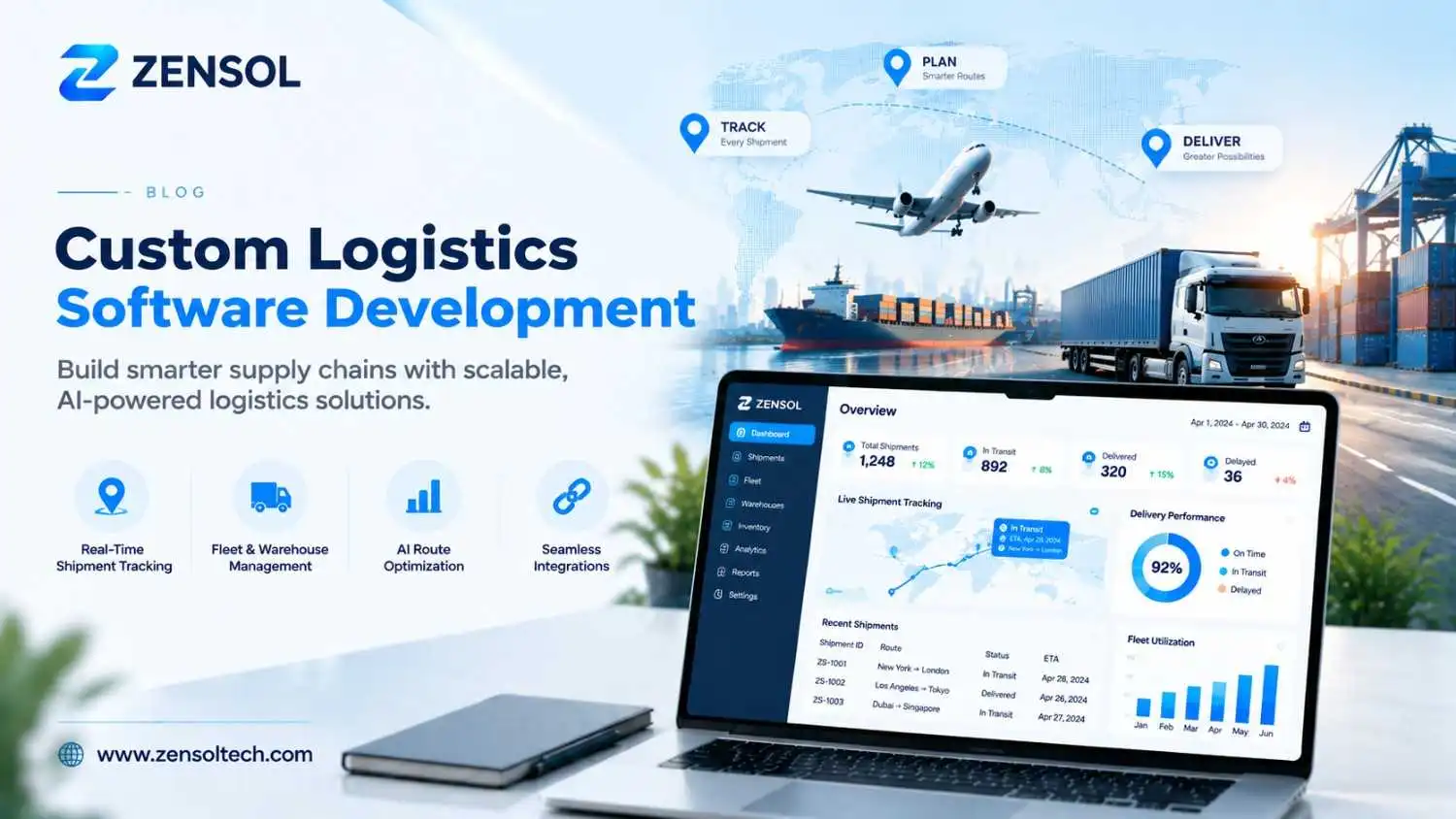
Logistics companies today face increasing pressure to deliver faster, reduce costs, and maintain complete operational visibility. However, many businesses still struggle with disconnected systems, manual processes, and inefficient workflows. Custom Logistics Software Development helps organizations build tailored solutions that improve transportation, warehouse, inventory, and supply chain operations.
Unlike generic software platforms, custom logistics solutions are designed around specific business requirements. From real-time shipment tracking and automated dispatching to AI-powered analytics and route optimization, the right technology helps businesses improve efficiency, make faster decisions, and scale operations.
Whether you manage transportation, warehousing, manufacturing, or eCommerce logistics, customized software can help create a more connected, intelligent, and future-ready supply chain.
What Is Custom Logistics Software Development?
Custom Logistics Software Development is the process of designing, developing, and maintaining software specifically created for a company’s logistics and supply chain operations.
Unlike ready-made logistics platforms that offer standard features for a wide range of businesses, custom software is built according to a company’s unique workflows, challenges, and goals.
For example, a freight company may need software that combines:
- Fleet tracking
- Driver management
- Route planning
- Delivery scheduling
- Customer notifications
- Performance reporting
A warehouse business may require:
- Inventory control
- Barcode scanning
- Warehouse automation
- Order processing
- Stock forecasting
A custom-built solution connects these activities into one centralized system instead of forcing businesses to manage operations through multiple disconnected tools.
The purpose of custom logistics software is not simply to digitize existing processes. The goal is to create a smarter operational ecosystem that improves visibility, automation, and decision-making.
Why Traditional Logistics Systems Are No Longer Enough
Many logistics companies still depend on spreadsheets, manual updates, phone communication, and separate software tools. While these methods may work for smaller operations, they often create problems as businesses grow.
Fragmented Information
When transportation, inventory, warehouse, and customer systems operate separately, teams may work with outdated information.
For example:
- Dispatch teams may not know the latest vehicle status.
- Warehouse teams may not have accurate inventory visibility.
- Customers may not receive timely shipment updates.
This lack of coordination increases delays and operational costs.
Manual Operations
Many logistics activities require repetitive tasks, including:
- Creating delivery schedules
- Updating shipment information
- Preparing reports
- Checking inventory levels
Logistics automation software reduces manual workload by automating repetitive processes and improving accuracy.
Limited Real-Time Visibility
Modern customers expect transparency. They want to know where their shipment is, when it will arrive, and whether there are any delays.
Real-time shipment tracking software provides businesses and customers with accurate delivery information.
Growth Limitations
A logistics process that works for 50 deliveries may fail when handling thousands of shipments.
Custom logistics software solutions provide scalability by allowing companies to add new features, locations, users, and integrations as they expand.
How Custom Logistics Software Solves Business Challenges
Custom software is valuable because it directly addresses operational problems.
| Business Challenge | Custom Software Solution |
|---|---|
| Poor shipment visibility | Real-time tracking dashboards |
| Inefficient route planning | Route optimization software |
| Vehicle management issues | Fleet management software |
| Warehouse inefficiencies | Warehouse Management System (WMS) |
| Inventory problems | Inventory management software |
| Data-driven decision challenges | Analytics and reporting dashboards |
| System connectivity issues | API and ERP integrations |
Instead of using separate tools for different activities, businesses can create a connected logistics ecosystem.
Custom Logistics Software vs Ready-Made Logistics Platforms
Choosing between standard software and custom development depends on business requirements.
| Factor | Ready-Made Software | Custom Logistics Software |
|---|---|---|
| Customization | Limited options | Built according to business needs |
| Scalability | Depends on vendor limitations | Designed for future growth |
| Integration | Limited compatibility | Can integrate with required systems |
| Workflow Support | Business adapts to software | Software adapts to business |
| Long-Term Control | Vendor controls updates | Business controls improvements |
Ready-made platforms can be suitable for companies with simple operations. However, businesses with complex supply chains, unique workflows, or specific integration needs often benefit from custom solutions.
How Modern Logistics Software Works
Modern logistics software connects transportation, warehouse, inventory, and supply chain operations through a centralized digital platform. It collects real-time data, automates workflows, integrates business systems, and helps companies make faster, data-driven decisions.
User Application Layer
This layer includes dashboards and mobile applications used by managers, drivers, warehouse teams, and customers. It provides real-time access to shipment updates, delivery status, inventory information, and operational insights.
Workflow Management Layer
The workflow layer manages essential logistics activities such as shipment processing, delivery assignments, route planning, inventory updates, and automated notifications. It helps reduce manual work and improves operational accuracy.
Integration Layer
Modern logistics platforms connect with ERP systems, CRM platforms, accounting software, GPS tracking tools, and carrier networks through APIs. These integrations create a connected ecosystem where information flows smoothly between systems.
Data and Intelligence Layer
Advanced logistics software uses analytics, machine learning, and predictive models to identify trends, optimize routes, forecast demand, and improve supply chain performance.
By combining automation, integration, and intelligent insights, modern logistics software helps businesses build more efficient, scalable, and future-ready operations.
Key Features of Custom Logistics Software Development
The success of logistics software depends on choosing features that solve real business problems.
| Feature | Business Benefits |
|---|---|
| Real-time shipment tracking | Improves shipment visibility and customer communication |
| Route optimization | Reduces unnecessary travel and improves delivery planning |
| Fleet management | Tracks vehicles, drivers, fuel usage, and maintenance |
| Warehouse Management System (WMS) | Improves warehouse operations and inventory accuracy |
| Inventory management | Provides real-time stock visibility |
| Reporting dashboards | Helps managers analyze operational performance |
| AI-powered analytics | Supports forecasting and intelligent decisions |
| API integrations | Connects existing business systems |
| Mobile applications | Enables drivers and teams to manage tasks remotely |
Types of Logistics Software Solutions Businesses Can Build
Different logistics businesses require different technology solutions based on their operations, shipment volume, and supply chain complexity. Custom logistics software solutions can be designed to improve transportation management, warehouse efficiency, fleet performance, and end-to-end supply chain visibility.
Transportation Management System (TMS)
A transportation management system (TMS) helps businesses plan, execute, and optimize transportation activities. It enables freight companies, distributors, and manufacturers to manage routes, track shipments, coordinate carriers, schedule deliveries, and improve transportation efficiency.
A custom TMS provides better control over delivery operations by connecting shipment data, vehicle information, and transportation workflows in one centralized platform.
Warehouse Management System (WMS)
A warehouse management system (WMS) helps businesses streamline warehouse operations, including receiving, inventory movement, picking, packing, and shipping processes.
For companies managing large inventories or multiple warehouses, a customized WMS improves stock accuracy, reduces operational delays, and provides better visibility into warehouse activities.
Fleet Management Software
Fleet management software helps transportation businesses monitor vehicles, drivers, maintenance schedules, fuel usage, and overall fleet performance.
By providing real-time fleet insights, companies can improve vehicle utilization, reduce downtime, and make better decisions about transportation resources.
Supply Chain Management Software
Supply chain software development focuses on connecting suppliers, inventory, transportation partners, and customers through a unified digital platform.
These solutions help businesses improve supply chain visibility, coordinate operations more effectively, reduce delays, and optimize planning across the entire logistics network.
Last-Mile Delivery Software
Last-mile delivery software helps businesses manage the final stage of delivery by improving route planning, driver coordination, customer notifications, and proof-of-delivery processes.
For eCommerce companies, retailers, and delivery providers, these solutions help create faster, more transparent, and customer-friendly delivery experiences.
Real-World Example of Custom Logistics Software
A distribution company handling hundreds of daily deliveries may struggle with manual dispatching, delayed shipment updates, poor fleet visibility, and disconnected warehouse operations. A custom logistics platform can integrate transportation management, GPS tracking, warehouse systems, and customer portals into a single connected solution.
This enables managers to access real-time operational insights, drivers to receive accurate delivery assignments, and customers to track shipments with greater transparency.
Benefits of Custom Logistics Software Development
Improved Operational Efficiency
Custom software eliminates unnecessary manual tasks and connects different departments through a unified platform.
Teams can manage transportation, inventory, and warehouse operations more effectively.
Reduced Transportation Costs
Route optimization software helps businesses plan better delivery routes, improve vehicle utilization, and reduce inefficient transportation activities.
Better Customer Experience
Customers receive accurate shipment updates through tracking portals and automated notifications.
Greater transparency builds trust and improves service quality.
Faster Decision-Making
Analytics dashboards provide managers with real-time information about:
- Delivery performance
- Inventory levels
- Fleet activity
- Operational trends
Better Supply Chain Optimization
Businesses can identify bottlenecks, improve planning, and create more efficient supply chain processes.
Scalability
Custom software grows with the business by allowing additional features, integrations, and operational capabilities.
How Much Does Custom Logistics Software Development Cost?
The cost of Custom Logistics Software Development depends on the project scope, complexity, features, integrations, and technology requirements.
Typical investment ranges include:
| Software Type | Estimated Cost |
|---|---|
| Basic tracking application | $20,000–$50,000 |
| Fleet management platform | $50,000–$150,000 |
| Transportation Management System | $100,000–$250,000+ |
| Enterprise logistics platform | $250,000+ |
The final cost depends on:
- Software Complexity: A simple tracking system requires fewer resources than a complete logistics ecosystem.
- Number of Features: Advanced functionality such as AI, mobile apps, automation, and analytics increases development requirements.
- Integrations: Connecting ERP, GPS, warehouse, payment, or carrier systems affects development complexity.
- Security Requirements: Logistics platforms often handle sensitive operational information, requiring strong security measures.
- Maintenance and Support: Continuous updates, improvements, and technical support should be considered as part of the overall investment.
How AI Is Transforming Logistics Software Development
AI is becoming an important part of modern logistics technology solutions.
Predictive Analytics
AI analyzes historical and real-time data to identify possible delays, demand changes, and operational risks.
Intelligent Route Optimization
AI-powered systems can consider:
- Traffic conditions
- Delivery priorities
- Vehicle capacity
- Driver availability
to recommend better routes.
Demand Forecasting
Businesses can predict inventory requirements and improve purchasing decisions.
Predictive Maintenance
AI can analyze vehicle performance data and identify possible maintenance issues before breakdowns occur.
Smart Inventory Management
AI helps businesses maintain better stock levels by analyzing demand patterns.
How to Choose the Right Logistics Software Development Company
Selecting the right technology partner is critical.
Consider:
Industry Experience
A company should understand logistics operations, workflows, and challenges.
Technical Expertise
Evaluate experience with:
- Cloud technologies
- APIs
- Mobile applications
- AI solutions
- Enterprise integrations
Portfolio
Previous projects demonstrate practical experience and development quality.
Security Practices
The company should follow strong security standards to protect operational data.
Long-Term Support
A reliable partner should provide maintenance and future improvements.
Why Choose Zensol Global Technologies for Logistics Software Development
Zensol Global Technologies helps businesses create customized software solutions designed around their operational goals.
The company focuses on developing scalable, practical, and business-driven applications for organizations looking to improve logistics operations through technology.
From transportation management systems and warehouse platforms to tracking solutions and automation tools, Zensol Global Technologies works with businesses to create software aligned with their workflows and future growth plans.
The development approach focuses on:
- Understanding business requirements
- Designing scalable architecture
- Creating user-friendly solutions
- Supporting long-term technology growth
For businesses exploring custom logistics software, choosing the right development partner can help transform operational challenges into opportunities.
Final Thoughts
The logistics industry is becoming increasingly technology-driven. Businesses that rely on disconnected systems and manual processes may struggle with rising costs, limited visibility, and changing customer expectations.
Custom Logistics Software Development provides companies with the ability to build solutions around their unique operational needs. From transportation management systems and warehouse platforms to AI-powered logistics solutions, customized software helps businesses improve efficiency, visibility, and scalability.
The most successful logistics technology projects begin with understanding business challenges and selecting solutions that create measurable value.
For companies looking to modernize operations, the right logistics software development partner can help build a smarter, more connected, and future-ready supply chain.