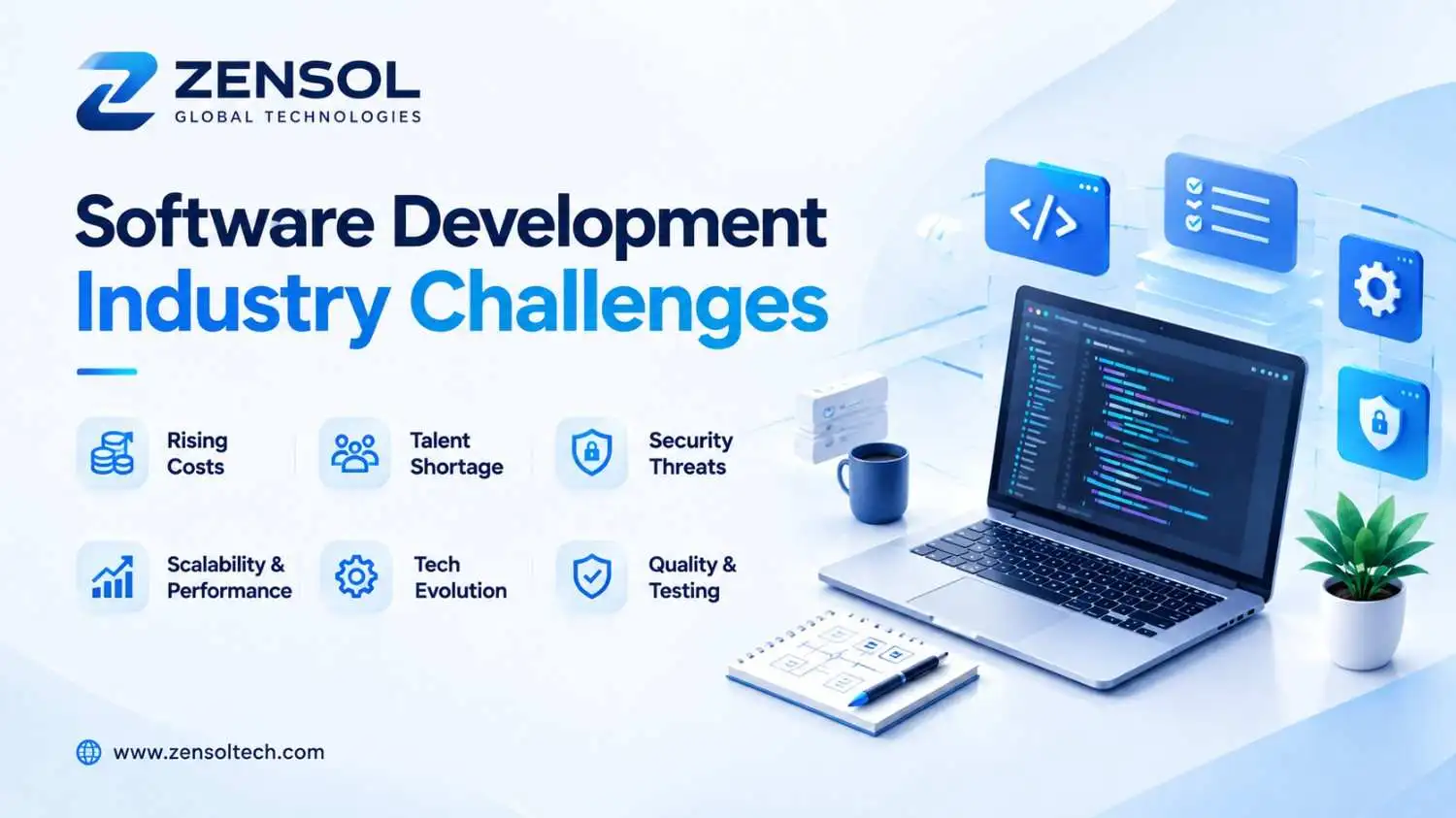
A successful software product is not created by coding alone. Behind every high-performing application is a combination of strategic planning, strong architecture, security practices, quality engineering, and continuous improvement. However, many businesses discover that building software is far more complex than expected. Rising costs, technology changes, security threats, scalability requirements, and talent shortages are creating new software development industry challenges that companies must address in 2026.
Today, software is no longer just a support tool for businesses. It drives customer experiences, operational efficiency, automation, and competitive advantage. From startups launching digital products to enterprises modernizing legacy platforms, organizations must build software that is secure, flexible, and capable of supporting future growth.
The challenge is that modern software development requires balancing multiple priorities at the same time:
- Faster product delivery
- Better user experiences
- Strong cybersecurity
- Scalable infrastructure
- Cost efficiency
- Continuous innovation
Companies that ignore these challenges often face delayed launches, increasing budgets, poor application performance, and costly redevelopment.
This guide explores the most important software development industry challenges in 2026, why they happen, their business impact, and practical solutions companies can use to build successful software products.
Why Software Development Is Becoming More Complex in 2026
Software development has evolved significantly over the last decade. Applications today are not isolated systems; they are connected ecosystems involving cloud platforms, artificial intelligence, APIs, automation tools, third-party integrations, and complex data environments.
Businesses are also under increasing pressure from customers who expect faster, smarter, and more personalized digital experiences.
Several factors are making software development more challenging:
Rapid Technology Evolution
New technologies such as AI, cloud computing, automation, and advanced frameworks create opportunities but also make technology decisions more difficult.
Choosing the wrong technology can result in:
- Higher maintenance costs
- Poor scalability
- Difficult upgrades
- Reduced competitiveness
Increasing Security Expectations
Cybersecurity is no longer an optional feature. Customers and businesses expect software applications to protect sensitive information and operate securely.
Growing Software Complexity
Modern applications often require:
- Multiple integrations
- Real-time data processing
- Mobile compatibility
- Cloud infrastructure
- AI-powered features
This increased complexity requires stronger planning and engineering expertise.
Software Development Industry Challenges in 2026
Understanding the biggest software development industry challenges helps businesses prepare better strategies and avoid common mistakes.
Rising Software Development Costs
One of the biggest challenges businesses face is controlling software development costs while maintaining quality.
Many companies underestimate the total investment required to build successful software. Development costs are not limited to writing code. They include:
- Product discovery
- UI/UX design
- Architecture planning
- Development
- Testing
- Security improvements
- Maintenance
- Future upgrades
A common mistake is starting development without clearly defining requirements. When business goals change during development, teams often need to rebuild features, causing delays and additional expenses.
For example, a company may develop an application quickly without considering future scalability. After gaining thousands of users, the system may struggle with performance because the original architecture was not designed for growth.
How businesses can reduce software costs:
- Conduct proper requirement analysis
- Prioritize features through MVP development
- Select scalable technologies
- Automate repetitive processes
- Invest in quality engineering early
The cheapest development option is not always the most cost-effective. Poor software decisions often create larger expenses in the future.
Shortage of Skilled Software Developers
The demand for skilled developers continues to increase as companies invest in digital transformation. However, finding professionals with specialized expertise has become one of the major software development challenges.
Modern software projects require knowledge in areas such as:
- Artificial intelligence
- Cloud architecture
- Cybersecurity
- Mobile development
- Enterprise applications
- DevOps practices
A shortage of skilled developers can lead to:
- Longer hiring cycles
- Increased recruitment expenses
- Delayed product releases
- Limited technical capabilities
Many businesses now work with experienced software development companies to access specialized skills without building large internal teams. Choosing the right software development services provider helps companies build secure, scalable, and future-ready applications while reducing development risks.
For companies in competitive technology markets like NYC, having access to experienced engineering talent can directly impact how quickly they can launch and improve digital products.
Technical Debt and Legacy System Challenges
Technical debt is one of the most underestimated software development risks.
Technical debt happens when teams choose short-term solutions instead of building systems with long-term maintainability in mind.
For example, a startup may launch an MVP quickly using a basic architecture. The product succeeds, but as users grow, the company discovers that the original system cannot handle increased traffic, integrations, or advanced features.
Common technical debt problems include:
- Slow application performance
- Difficult code maintenance
- Higher development costs
- Security vulnerabilities
- Slower innovation
Legacy systems create similar problems for established businesses. Older applications may depend on outdated technologies that limit modernization.
Businesses can reduce technical debt by:
- Performing regular code reviews
- Improving software architecture
- Refactoring outdated systems
- Using automated testing
- Maintaining proper documentation
Strong engineering decisions early in the software development process reduce future risks.
Cybersecurity and Data Privacy Challenges
Cybersecurity has become one of the most critical software development industry challenges in 2026.
Applications now manage sensitive information including:
- Customer data
- Financial transactions
- Business operations
- Personal information
A security failure can result in:
- Data breaches
- Financial losses
- Compliance problems
- Loss of customer trust
A common mistake businesses make is treating security as a final step after development. Modern software teams follow a secure software development lifecycle where security is considered from planning to deployment.
Important security practices include:
- Secure coding standards
- Vulnerability testing
- Data encryption
- Access control
- Security monitoring
Companies building healthcare, fintech, or enterprise software solutions must give additional attention to compliance and data protection.
AI Integration Challenges in Software Development
Artificial intelligence is one of the biggest forces changing software development in 2026. AI tools can improve productivity, automate tasks, and create smarter applications.
However, AI adoption also introduces new challenges.
AI-Generated Code Risks
AI coding tools can accelerate development, but generated code still requires expert review.
Potential issues include:
- Security vulnerabilities
- Incorrect implementation
- Poor architecture decisions
- Lack of maintainability
Human expertise remains essential for reviewing and improving AI-generated solutions.
Data Quality and Privacy Issues
AI systems depend on reliable data. Poor-quality data can reduce accuracy and create privacy concerns.
Businesses must focus on:
- Data governance
- Secure data handling
- Model monitoring
Integration Complexity
Adding AI features to existing applications requires:
- Proper infrastructure
- Skilled developers
- Clear business objectives
Companies should adopt AI strategically instead of implementing it only because it is a trending technology.
Software Scalability and Performance Challenges
A software product that works today may not work tomorrow if it cannot support business growth.
Scalability problems usually appear when applications experience:
- Increased users
- Higher transaction volumes
- More data processing requirements
Common performance issues include:
- Slow loading speeds
- System failures
- Poor user experience
- Infrastructure limitations
Scalability should be planned during the initial software development process.
Effective solutions include:
- Cloud-native architecture
- Database optimization
- Load testing
- Performance monitoring
Businesses investing in custom software development should design systems with future growth in mind.
Software Quality Assurance and Testing Challenges
Many companies focus heavily on development speed but underestimate the importance of software testing.
Poor testing can result in:
- Application failures
- Security issues
- Customer dissatisfaction
- Expensive fixes after launch
Modern software teams use:
- Automated testing
- Continuous integration and delivery (CI/CD)
- Performance testing
- Security testing
Quality assurance should be part of every stage of the software development lifecycle, not something added before launch.
Communication and Software Project Management Challenges
Even technically strong teams can struggle when communication and project management are weak.
Common software project management challenges include:
- Unclear requirements
- Poor documentation
- Misalignment between teams
- Changing priorities
Agile software development helps teams manage these challenges through:
- Continuous feedback
- Better collaboration
- Regular improvements
- Transparent workflows
Successful software projects require alignment between developers, business leaders, designers, and users.
Real Software Development Mistakes Businesses Make
Many software problems are caused by business decisions rather than technical limitations.
Starting Development Without Proper Planning
Some businesses begin coding before understanding:
- Target users
- Business goals
- Required features
- Technical limitations
A proper discovery phase helps prevent expensive changes later.
Choosing Developers Based Only on Price
Low-cost development may appear attractive initially, but poor-quality software can create higher expenses through maintenance and redevelopment.
Businesses should evaluate:
- Technical expertise
- Development processes
- Industry experience
- Communication quality
Ignoring Post-Launch Software Maintenance
Software requires continuous improvement after launch.
Successful products need:
- Security updates
- Performance improvements
- Feature enhancements
- Technical monitoring
How Businesses Can Overcome Software Development Challenges
Overcoming software development industry challenges requires a strategic approach combining technology expertise, planning, and execution.
Work With an Experienced Software Development Partner
The right development partner helps businesses reduce risks and build better software solutions.
Companies should look for partners with experience in:
- Software architecture
- Quality assurance
- Cloud technologies
- AI solutions
- Security practices
Zensol Global Technologies helps businesses create scalable software solutions by combining modern engineering practices with a strong understanding of business objectives.
Need help overcoming your software development challenges? Contact our software development experts to discuss your project requirements and technology goals.
Build Scalable and Secure Architecture
Successful applications require:
- Flexible architecture
- Cloud readiness
- Strong security foundations
- Performance optimization
Adopt Agile and DevOps Practices
Agile development improves flexibility, while DevOps practices help teams automate deployment, testing, and delivery.
Together, these approaches improve software quality and development efficiency.
Future Software Development Trends Businesses Should Watch in 2026
The future of software development will continue to be shaped by automation, intelligence, and scalability.
AI-Assisted Development
AI will continue supporting developers through:
- Code assistance
- Automated testing
- Productivity improvements
Cloud-Native Applications
Cloud-based software will remain important because businesses need flexible and scalable systems.
Intelligent Automation
Automation will help companies improve efficiency and reduce repetitive work.
Low-Code and No-Code Platforms
These platforms will allow businesses to build applications faster while reducing development barriers.
Security-First Engineering
Security will become a fundamental part of software architecture.
How to Choose the Right Software Development Partner in 2026
Choosing the right technology partner can determine whether a software project succeeds or fails.
Businesses should evaluate:
Technical Expertise
Does the company understand modern technologies, architecture, and scalability?
Development Process
Does the team follow structured methodologies such as Agile and DevOps?
Security Approach
Does the company integrate security throughout development?
Long-Term Support
Can the partner provide maintenance and future improvements?
For businesses, including growing companies in NYC adopting digital solutions, partnering with an experienced development team can reduce risk and accelerate innovation.
Zensol Global Technologies works with organizations to build secure, scalable, and customized software solutions designed for long-term success.
Conclusion
The software development industry challenges businesses face in 2026 are becoming more complex as technology continues to evolve. Successful software development requires more than technical skills; it requires strategic planning, security awareness, scalable architecture, and experienced execution.
Companies that understand these challenges can make better technology decisions, reduce risks, and create software solutions that support long-term growth.
By partnering with experienced technology providers and adopting modern software development practices, businesses can transform development challenges into opportunities for innovation and competitive advantage.