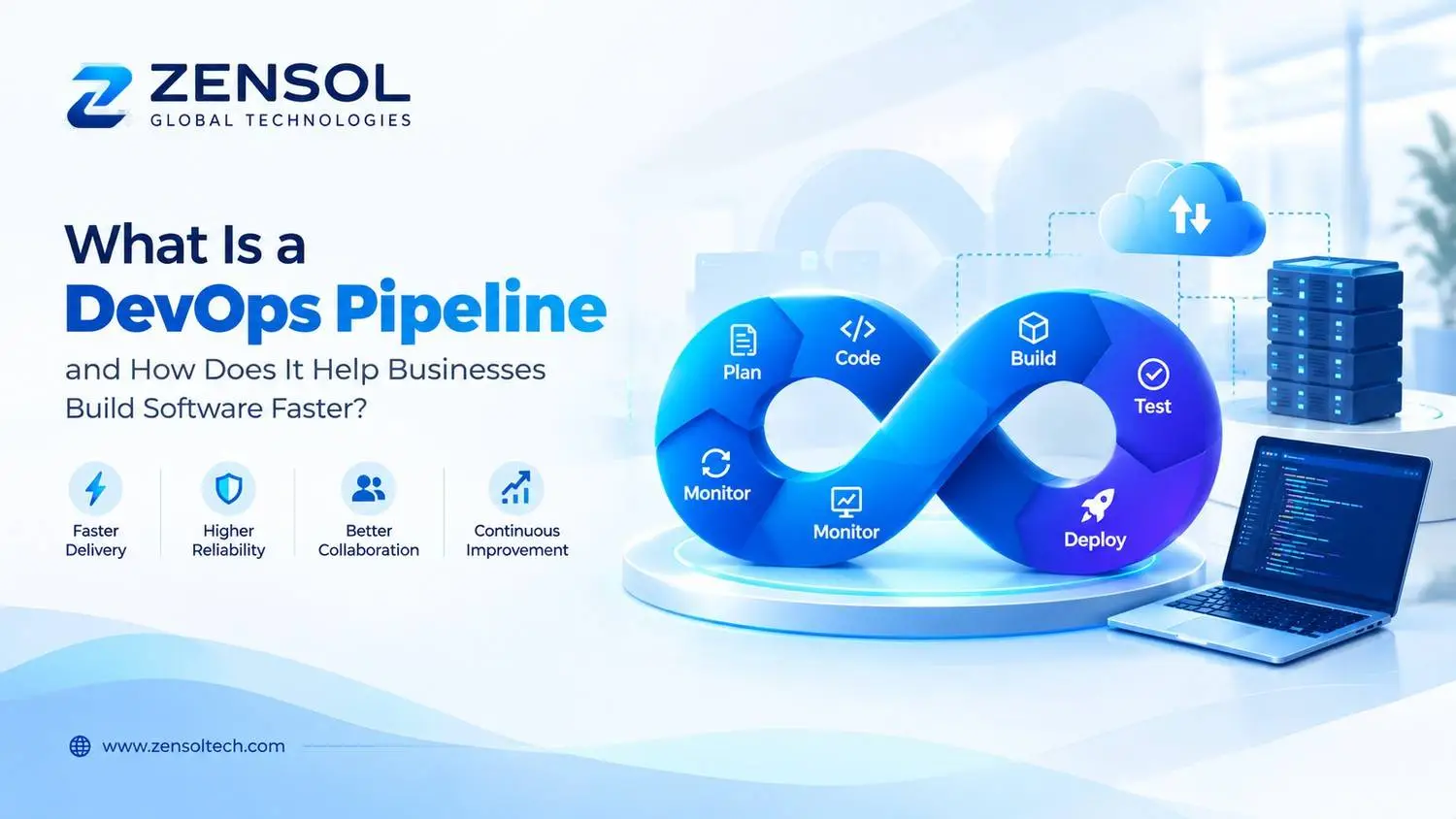
A great software idea can lose its competitive advantage when development slows down because of manual processes, delayed testing, deployment challenges, and disconnected teams. As businesses increasingly depend on digital products, the ability to deliver reliable software quickly has become a major factor in growth and customer satisfaction. This is where understanding What Is a DevOps Pipeline becomes essential. A DevOps pipeline is an automated workflow that connects development, testing, deployment, and monitoring processes to help teams deliver software faster, more consistently, and with fewer risks.
Many organizations still face challenges when moving software from development to production. A feature may be completed by developers, but manual approvals, inconsistent environments, and limited collaboration between development and operations teams can delay releases for days or even weeks. These bottlenecks not only slow innovation but can also impact customer experience, operational efficiency, and business growth.
A modern DevOps pipeline changes the way companies build and maintain software by creating a continuous delivery system where automation and collaboration work together. Instead of treating coding, testing, deployment, and monitoring as separate activities, DevOps connects every stage into a streamlined process that improves reliability and scalability. For businesses building applications, SaaS platforms, and digital solutions, adopting DevOps practices provides a stronger foundation for faster innovation and long-term technology success.
What Is a DevOps Pipeline?
A DevOps pipeline is a sequence of automated stages that moves software through the software development lifecycle, from initial coding to deployment and monitoring.
The main purpose of a DevOps pipeline is to remove unnecessary manual processes and create a consistent way of delivering applications.
Instead of developers writing code and manually passing it to different teams, a DevOps pipeline automatically manages important steps such as:
- Code validation
- Application building
- Automated testing
- Security checks
- Deployment preparation
- Production monitoring
For example, imagine a company updating its customer dashboard application. A developer introduces a new feature and pushes the code to a repository. The DevOps pipeline can automatically test the change, verify that existing functionality is not affected, prepare the application for deployment, and monitor performance after release.
This automated workflow allows businesses to improve software continuously while reducing the chance of human error.
A complete DevOps pipeline usually includes:
- Version control systems
- Continuous Integration (CI)
- Continuous Delivery (CD)
- Automated testing
- Deployment automation
- Cloud infrastructure
- Infrastructure as Code (IaC)
- Application monitoring
The goal is simple: create a reliable system where software can move from an idea to a working product efficiently.
Why DevOps Pipelines Have Become Essential for Businesses
Businesses today compete through digital experiences. Customers expect applications to be fast, secure, and regularly improved.
Traditional software delivery methods often struggle because they depend heavily on manual work. When teams manually test, configure environments, and deploy applications, the process becomes slower and more vulnerable to mistakes.
A DevOps pipeline creates a more predictable delivery system.
Companies adopt DevOps pipelines because they help solve problems such as:
- Slow software release cycles
- Deployment failures
- Limited collaboration between teams
- Difficulty managing complex applications
- Growing infrastructure requirements
The biggest business advantage is not just speed. It is the ability to create a repeatable process for delivering reliable software.
For example, a financial technology company may need to release security updates quickly. With a DevOps pipeline, automated testing and deployment workflows allow the company to introduce improvements faster while maintaining application stability.
How Does a DevOps Pipeline Work?
A DevOps pipeline works by connecting different stages of software development into one automated workflow.
The typical process follows:
Plan → Code → Build → Test → Deploy → Monitor → Improve
Each stage contributes to creating a better software delivery process.
Source Code Management: Creating a Strong Foundation
Every DevOps pipeline begins with managing application code properly.
Developers use version control platforms such as GitHub, GitLab, or Bitbucket to store and manage code changes.
Version control allows teams to:
- Track modifications
- Collaborate between developers
- Review code changes
- Maintain previous versions
For modern software teams, this stage is critical because multiple developers may work on different parts of an application at the same time.
A well-managed code repository creates the foundation for automation.
Continuous Integration: Improving Development Quality
Continuous Integration (CI) is one of the most important parts of a DevOps pipeline.
CI allows developers to frequently merge code changes into a shared repository. Whenever new code is submitted, automated systems check whether those changes work correctly.
A CI process may automatically:
- Build the application
- Run automated tests
- Analyze code quality
- Identify errors
This approach helps teams discover problems earlier instead of finding them after deployment.
Tools commonly used for continuous integration include:
- Jenkins
- GitHub Actions
- GitLab CI/CD
Continuous integration improves collaboration because developers receive faster feedback about their code.
Automated Testing: Protecting Software Reliability
Testing is where many traditional development processes slow down. Manual testing requires significant time and effort, especially for large applications.
A DevOps pipeline uses automated testing to verify software quality continuously.
Testing may include:
- Functional Testing: Ensures application features work correctly.
- Security Testing: Identifies vulnerabilities before deployment.
- Performance Testing: Checks how applications behave under different workloads.
- Integration Testing: Ensures different systems communicate correctly.
For example, an online marketplace releasing a new payment feature can automatically test checkout functionality before making the update available to customers.
This reduces the risk of releasing software that creates problems for users.
Continuous Delivery and Deployment Automation
After code passes testing, it moves toward deployment.
Continuous Delivery ensures that software is always ready for release. Continuous Deployment can automatically deliver approved changes into production environments.
Deployment automation helps organizations maintain consistency across environments.
Modern businesses often combine deployment automation with:
- Cloud infrastructure
- Docker containers
- Kubernetes orchestration
- Infrastructure as Code
This allows applications to scale efficiently as business needs grow.
DevOps Pipeline Architecture Explained
A modern DevOps pipeline connects several technologies together to create a complete software delivery ecosystem.
A simplified workflow looks like this:
Developer → Code Repository → CI Build → Automated Testing → Deployment → Cloud Environment → Monitoring
Each component serves a specific purpose.
| Component | Purpose | Examples |
|---|---|---|
| Version Control | Manage application code | GitHub, GitLab |
| CI/CD Automation | Build and release software | Jenkins, GitHub Actions |
| Containers | Create consistent application environments | Docker |
| Orchestration | Manage large-scale deployments | Kubernetes |
| Infrastructure Automation | Manage cloud resources | Terraform |
| Monitoring | Track application performance | Prometheus, Grafana |
This architecture helps businesses create a reliable and repeatable software delivery process.
Real Business Example: DevOps Pipeline in Action
Consider a SaaS company developing a project management platform.
The company wants to release a new collaboration feature.
Without a DevOps pipeline, the process may involve:
- Developers completing the feature
- Testers manually checking functionality
- Operations teams preparing servers
- Scheduling a release window
This process can become slow and difficult to manage.
With a DevOps pipeline:
- A developer submits new code.
- The CI system automatically validates the changes.
- Automated tests check application functionality.
- Security checks identify potential issues.
- The update moves to a staging environment.
- Approved changes are deployed.
- Monitoring tools track user experience.
The result is a faster, safer, and more predictable release process.
This is why organizations investing in digital products increasingly rely on DevOps automation.
DevOps Pipeline Tools: Choosing the Right Technology
A common mistake businesses make is selecting tools before understanding their workflow requirements.
The right tools depend on:
- Application architecture
- Development team skills
- Cloud environment
- Security requirements
- Business goals
Some widely used DevOps pipeline tools include:
| Tool | Best Used For | Business Value |
|---|---|---|
| Jenkins | Enterprise automation workflows | Flexible CI/CD automation |
| GitHub Actions | Git-based development teams | Simple workflow automation |
| Docker | Application packaging | Consistent deployments |
| Kubernetes | Large-scale applications | Application scalability |
| Terraform | Cloud infrastructure management | Repeatable environments |
The technology stack should support the business process, not replace the need for a proper strategy.
DevOps Pipeline vs CI/CD Pipeline: What Is the Difference?
DevOps pipeline and CI/CD pipeline are closely connected, but they are not exactly the same.
A CI/CD pipeline focuses on automating:
- Code integration
- Testing
- Software delivery
- Deployment
DevOps is broader and includes:
- Development and operations collaboration
- Infrastructure management
- Security practices
- Monitoring
- Continuous improvement
In simple terms:
CI/CD is an important technical component of DevOps, while DevOps represents the complete approach for improving software delivery.
Common Mistakes Businesses Make When Implementing DevOps
Many organizations believe DevOps is only about purchasing automation tools. This is one of the biggest misconceptions.
Successful DevOps adoption requires improvements in processes, teamwork, and technology.
Common mistakes include:
- Automating Poor Processes: Automation cannot fix inefficient workflows. Businesses should improve processes before automating them.
- Ignoring Security: Security should be included throughout the pipeline through DevSecOps practices.
- Choosing Too Many Tools: A complex technology stack can create additional management problems.
- Focusing Only on Speed: Fast deployment is valuable, but reliability and quality are equally important.
Benefits of Implementing a DevOps Pipeline
A properly designed DevOps pipeline provides both technical and business advantages.
Businesses can achieve:
- Faster software releases
- Better application reliability
- Reduced operational costs
- Improved collaboration
- Easier scalability
- Stronger security practices
The true value of DevOps is creating a system where teams can continuously improve software instead of struggling with manual delivery problems.
How Businesses Can Start Building a DevOps Pipeline
Implementing DevOps should be a gradual process.
Businesses should begin by understanding their current development challenges and identifying areas where automation can provide the most value.
A practical approach includes:
- Reviewing existing development workflows
- Identifying repetitive manual processes
- Selecting suitable DevOps tools
- Introducing automation gradually
- Measuring performance improvements
For organizations building complex applications, working with experienced technology specialists can help avoid common implementation challenges.
Zensol Global Technologies helps businesses develop scalable software solutions by combining modern development practices, automation strategies, and cloud technologies.
Final Thoughts
A DevOps pipeline is more than an automation workflow. It is a strategic approach that helps businesses create better software delivery processes through collaboration, automation, and continuous improvement.
By combining continuous integration, continuous delivery, automated testing, cloud infrastructure, and monitoring, organizations can build applications that are faster, more reliable, and easier to scale.
The most successful DevOps implementations focus on more than technology. They combine the right tools with strong processes, security practices, and teamwork.
For businesses looking to modernize their software delivery approach, Zensol Global Technologies provides technology expertise to help design efficient digital solutions built for scalability and long-term growth. If you are exploring ways to improve your software delivery workflow, you can connect with our technology experts to discuss your requirements.