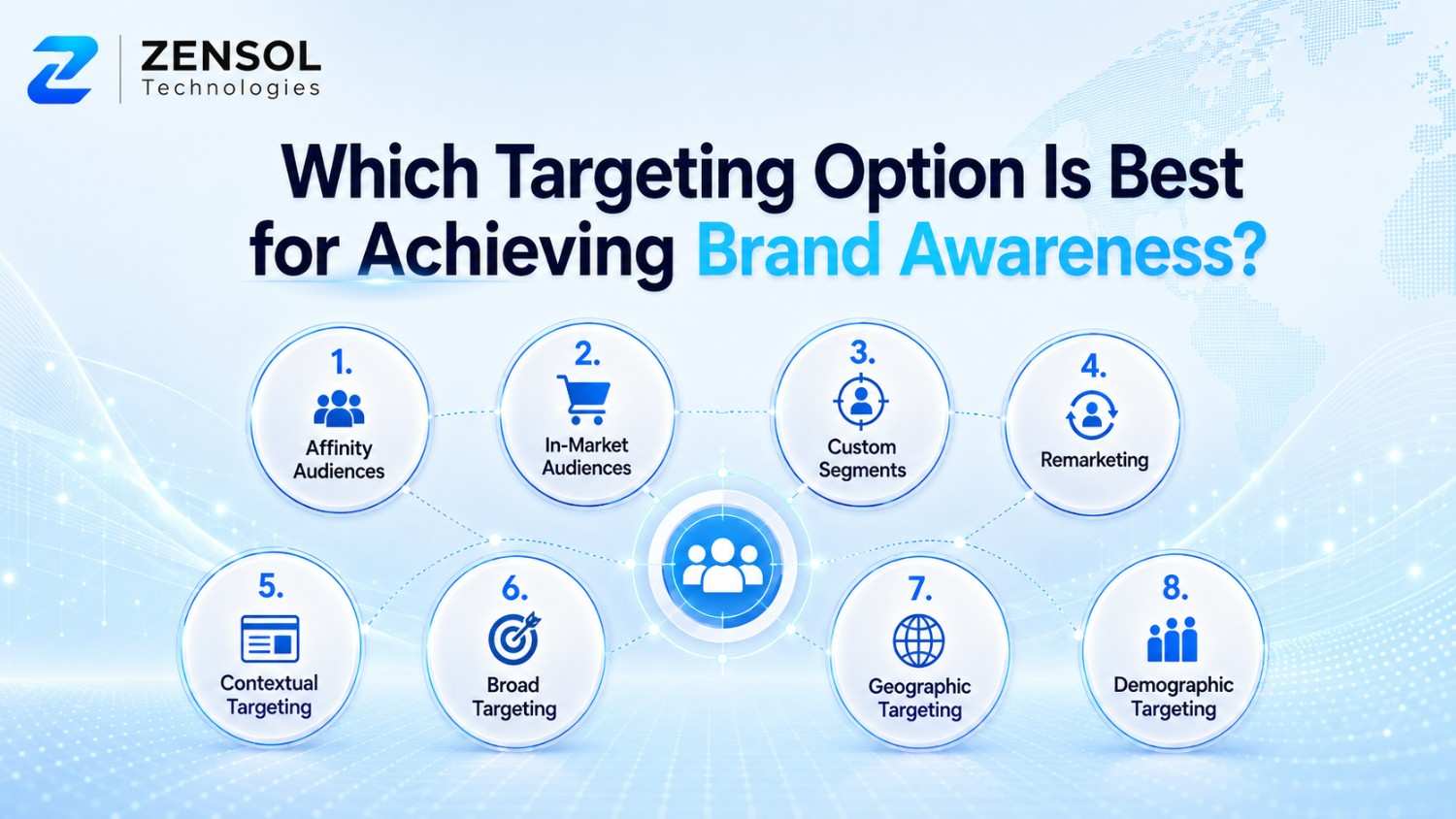
Quick Answer: Affinity audiences are the best targeting option for achieving brand awareness in Google Ads because they help advertisers reach users based on their long-term interests, habits, and lifestyle behaviors.
Google Ads Certification Answer: Affinity audiences
Correct Answer: Affinity audiences
Explanation: Affinity audiences help advertisers reach users based on their long-term interests, passions, and lifestyle behaviors, making them suitable for Google Ads brand awareness campaigns.
Why Are Affinity Audiences Best for Brand Awareness?
Affinity audiences are the recommended targeting option for achieving brand awareness because they help advertisers reach users based on their long-term interests, passions, and lifestyle behaviors.
They are especially effective for awareness campaigns because they allow businesses to build recognition and familiarity before customers are ready to purchase.
Quick Comparison: Best Google Ads Targeting Options for Brand Awareness
| Business Goal | Recommended Google Ads Targeting Option |
|---|---|
| Introduce a brand to a wider relevant audience | Affinity audiences |
| Reach a highly specific customer group | Custom segments |
| Show ads beside relevant content | Contextual targeting |
| Reconnect with previous visitors | Remarketing audiences |
| Let Google's systems identify opportunities | Broad targeting |
A strong awareness campaign usually combines multiple audience strategies instead of depending on one targeting option alone.
How Google Ads Audience Targeting Works
Google Ads provides different audience targeting options based on how advertisers want to reach potential customers.
Some options focus on user interests, some focus on content relevance, and others use existing customer data.
Choosing the right option requires understanding what each audience type is designed to achieve.
1. Affinity Audiences: Best Starting Point for Broad Brand Awareness
Affinity audiences help advertisers reach people based on their long-term interests, passions, and lifestyle behaviors.
They are useful when a business wants to introduce its brand to people who are likely to care about a specific category.
Affinity audiences are commonly used in Google Display Ads and YouTube campaigns when advertisers want to increase brand awareness because they allow businesses to reach relevant users at scale.
For example:
A productivity software company may target users interested in:
- Business technology
- Entrepreneurship
- Workplace efficiency
- Digital transformation
A fitness company may target people interested in:
- Health and wellness
- Exercise
- Healthy living
Why Affinity Audiences Work for Awareness
Affinity audiences provide:
- Large-scale reach
- Relevant audience discovery
- Strong support for Display and YouTube campaigns
However, one common mistake businesses make is assuming the largest audience automatically creates the best awareness campaign.
More impressions do not always mean more impact.
A smaller but more relevant audience may create stronger brand recall than a large audience with little connection to the business.
2. Custom Segments: Better for Specialized Markets
Custom segments allow advertisers to create more specific audiences using signals such as:
- Keywords
- Websites
- Apps
- Relevant interests
They are especially useful when a business operates in a niche market where standard audience categories are too broad.
For example:
A cybersecurity company targeting enterprise buyers may create a custom segment around:
- Security software platforms
- Compliance solutions
- Enterprise technology topics
Custom segments are often valuable for B2B companies because their ideal customers may not fit into general audience categories.
3. Contextual Targeting: Reaching Users Through Relevant Content
Contextual targeting focuses on the content users are viewing instead of only their interests.
For example:
A project management software company may display ads on content about:
- Remote work
- Team collaboration
- Business productivity
This approach works because the advertisement appears in an environment connected to the user's current activity.
Contextual targeting can be effective when the connection between the content and the product is clear.
4. Remarketing Audiences: Strengthening Brand Recognition
Remarketing targets people who already interacted with a business.
Examples include:
- Website visitors
- Previous customers
- Content viewers
- Lead form users
Remarketing is valuable because these users already have some awareness of the brand.
However, it should not usually replace prospecting strategies because it focuses on existing audiences.
A strong marketing funnel often looks like:
- Affinity or custom segments introduce the brand
- Remarketing reinforces recognition
- Conversion campaigns capture demand
5. Broad Targeting: Useful When Data Supports It
Broad targeting gives Google's systems more freedom to identify potential customers.
It can work well when:
- Conversion tracking is properly configured
- The account has enough historical data
- Campaign signals are strong
However, testing broad targeting too early can make results harder to evaluate because the system has limited information about valuable users.
Google Ads Audience Targeting Comparison
| Targeting Option | Best For | Advantages | Limitations | Example |
|---|---|---|---|---|
| Affinity Audiences | Broad awareness | Strong reach with relevant interests | Less specific | Technology brand awareness |
| Custom Segments | Niche markets | More control over audience definition | Requires research | B2B software targeting |
| Contextual Targeting | Content-based discovery | Matches user environment | Less focused on individual users | Ads on industry articles |
| Remarketing | Existing audiences | Improves brand recall | Limited new reach | Previous website visitors |
| Broad Targeting | Data-driven campaigns | Allows algorithmic discovery | Needs strong signals | Mature advertising accounts |
How PPC Experts Choose the Right Brand Awareness Audience
Experienced advertisers do not begin with the question:
“Which audience gives the cheapest impressions?”
They ask:
“Which audience has the highest chance of remembering and valuing this brand?”
At ZenSol Technologies, audience selection should be evaluated through several practical factors.
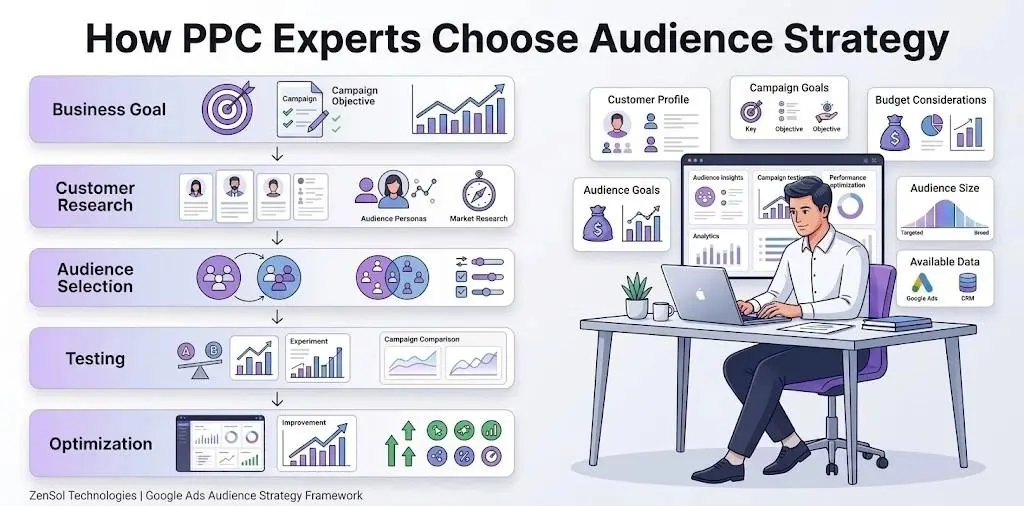
1. Understand the Ideal Customer
Before selecting an audience, advertisers should understand:
- Who has the problem?
- What information influences their decisions?
- What topics, websites, or platforms do they engage with?
A business selling enterprise software will require a different audience strategy compared with a local consumer service.
2. Consider Available Data
New businesses often need audience discovery.
Established businesses may benefit from:
- Website visitor data
- Customer lists
- Previous engagement signals
Available data can influence whether a company should start with broader audiences or more focused targeting.
3. Avoid Over-Restricting the Audience
A common mistake is adding too many targeting layers.
Advertisers may combine:
- Multiple interests
- Narrow demographics
- Limited locations
- Many exclusions
The result can be an audience that is too small for effective campaign delivery.
Relevance matters, but campaigns also need enough space to learn.
Brand Awareness Audience Strategy by Business Type
B2B Software Companies
Recommended approach:
- Custom segments
- Affinity audiences
- Remarketing
Why:
B2B buyers usually require education and multiple interactions before making decisions.
Ecommerce Brands
Recommended approach:
- Affinity audiences
- Broad targeting tests
- YouTube awareness campaigns
Why:
Ecommerce brands often need wider discovery and repeated exposure.
Local Businesses
Recommended approach:
- Geographic targeting
- Contextual targeting
- Remarketing
Why:
Local businesses benefit from reaching people within their actual service area.
Common Brand Awareness Targeting Mistakes
Focusing Only on Low CPM
Cheap impressions are not always valuable.
A campaign that reaches irrelevant users may produce thousands of impressions but create little brand recognition.
The goal is meaningful visibility, not just inexpensive reach.
Measuring Awareness Only Through Clicks
Awareness campaigns often influence customers before they click or purchase.
Important metrics include:
- Reach
- Impressions
- Frequency
- CPM
- Video completion rate
- Brand searches
- Website engagement
Choosing One Audience Forever
Audience strategy should be tested and improved.
Strong campaigns often compare:
- Affinity vs custom segments
- Contextual vs audience targeting
- Broad vs restricted approaches
Performance data should guide future decisions.
How Zensol Technologies Approaches Google Ads Audience Strategy
A successful brand awareness campaign requires more than selecting an audience category.
Zensol Technologies recommends evaluating:
- Customer research
- Audience relevance
- Campaign objective
- Creative messaging
- Measurement setup
- Ongoing testing
The best targeting choice is not always the most popular option. It is the option that aligns with the customer's buying journey and business goals.
How to Measure Brand Awareness Campaign Success
Brand awareness performance should be evaluated using multiple signals.
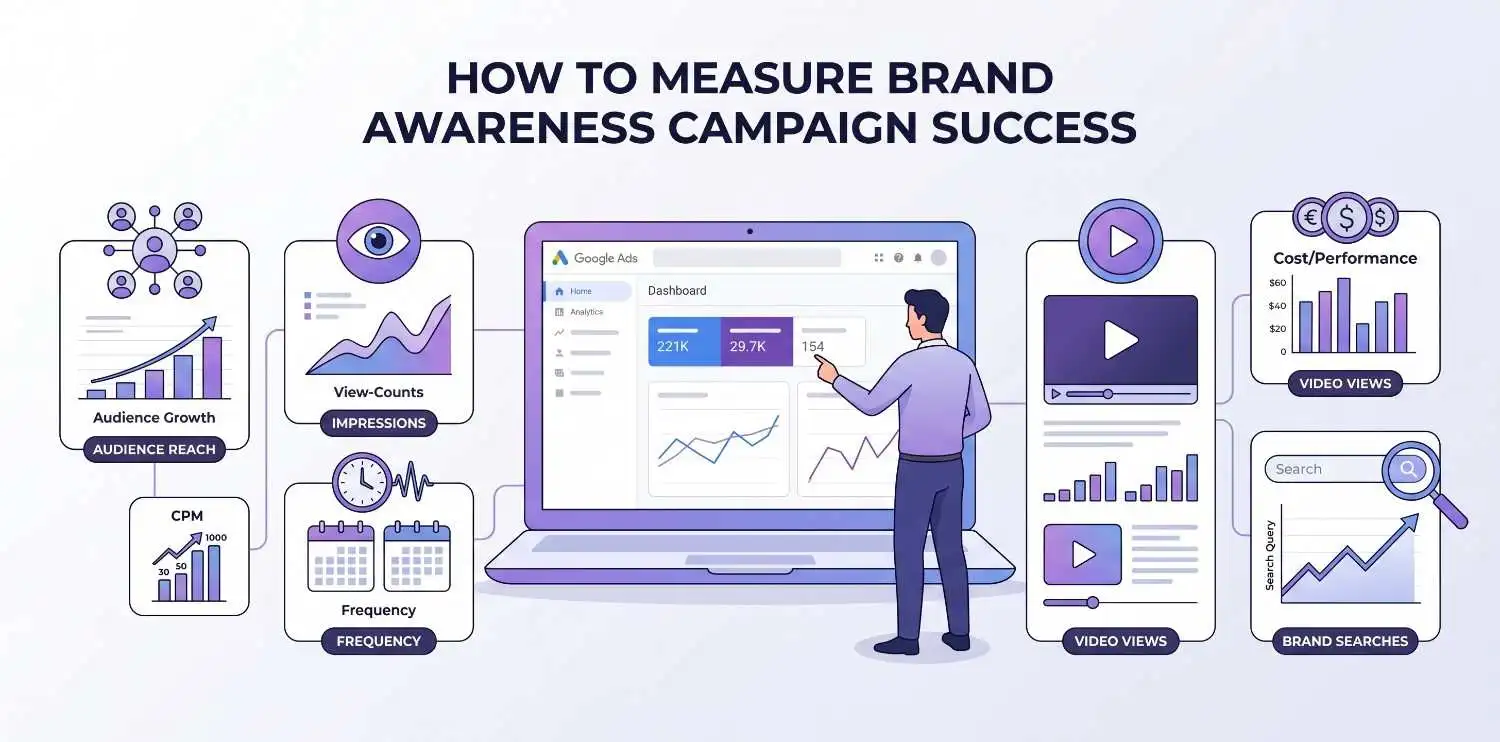
Reach
Measures how many unique users saw the campaign.
Frequency
Shows how often users were exposed to the brand message.
Engagement
Includes:
- Video views
- Website visits
- Interactions
Brand Growth Signals
Businesses can also monitor:
- Increase in branded searches
- Direct traffic growth
- Assisted conversions
Final Recommendation: Which Targeting Option Is Best for Brand Awareness?
For most Google Ads awareness campaigns, affinity audiences are an excellent starting point because they help businesses reach people who already show interest in relevant topics.
However, the strongest campaigns do not rely on one audience type.
A complete strategy may combine:
- Affinity audiences for discovery
- Custom segments for specialized markets
- Contextual targeting for content relevance
- Remarketing for brand recall
- Broad targeting for data-driven optimization
The biggest mistake businesses make is treating audience targeting as a one-time setup decision.
Successful brand awareness campaigns are built through continuous testing, measurement, and refinement.
The right audience is not simply the one that creates the most impressions. It is the one that helps the right people remember the brand when they are ready to take action.