Businesses are constantly searching for better ways to reduce operational costs, automate repetitive tasks, and improve productivity. Traditional software often requires expensive licenses, complex installations, and ongoing maintenance. Modern companies are moving toward flexible cloud solutions that allow teams to access powerful tools anytime, anywhere. This shift has made B2B SaaS one of the most important software models for businesses in 2026.
B2B SaaS allows companies to use specialized software through online platforms instead of managing their own infrastructure. From sales management and accounting to automation and analytics, SaaS products help organizations solve real business problems with scalable technology.
This guide explains the B2B SaaS definition, how SaaS platforms work, key benefits, examples, development process, pricing models, important metrics, and what businesses should consider before building their own SaaS solution.
What Is B2B SaaS?
B2B SaaS (Business-to-Business Software as a Service) is a software delivery model where companies provide cloud-based applications to other businesses through a subscription-based service.
In simple terms, the B2B SaaS meaning is software created for businesses that can be accessed online without installing and maintaining the application on company devices.
Instead of purchasing traditional software licenses, businesses subscribe to a SaaS platform and pay monthly or yearly fees based on their requirements. The software provider manages hosting, updates, security, and technical maintenance.
Common examples of B2B SaaS solutions include:
- Customer relationship management (CRM) platforms
- Project management tools
- Accounting software
- Marketing automation systems
- Human resource management platforms
- Data analytics solutions
- Customer support software
For example, a growing e-commerce company may use a SaaS platform to manage customer data, automate marketing campaigns, track inventory, and analyze sales performance without building separate internal systems.
How Does a B2B SaaS Platform Work?
A B2B SaaS platform operates through cloud computing technology. The software provider hosts the application on secure servers, manages infrastructure, and delivers continuous updates while customers access the service online.
The SaaS business model usually works through recurring subscriptions. Businesses pay monthly or yearly fees based on factors such as the number of users, required features, storage capacity, or usage levels.
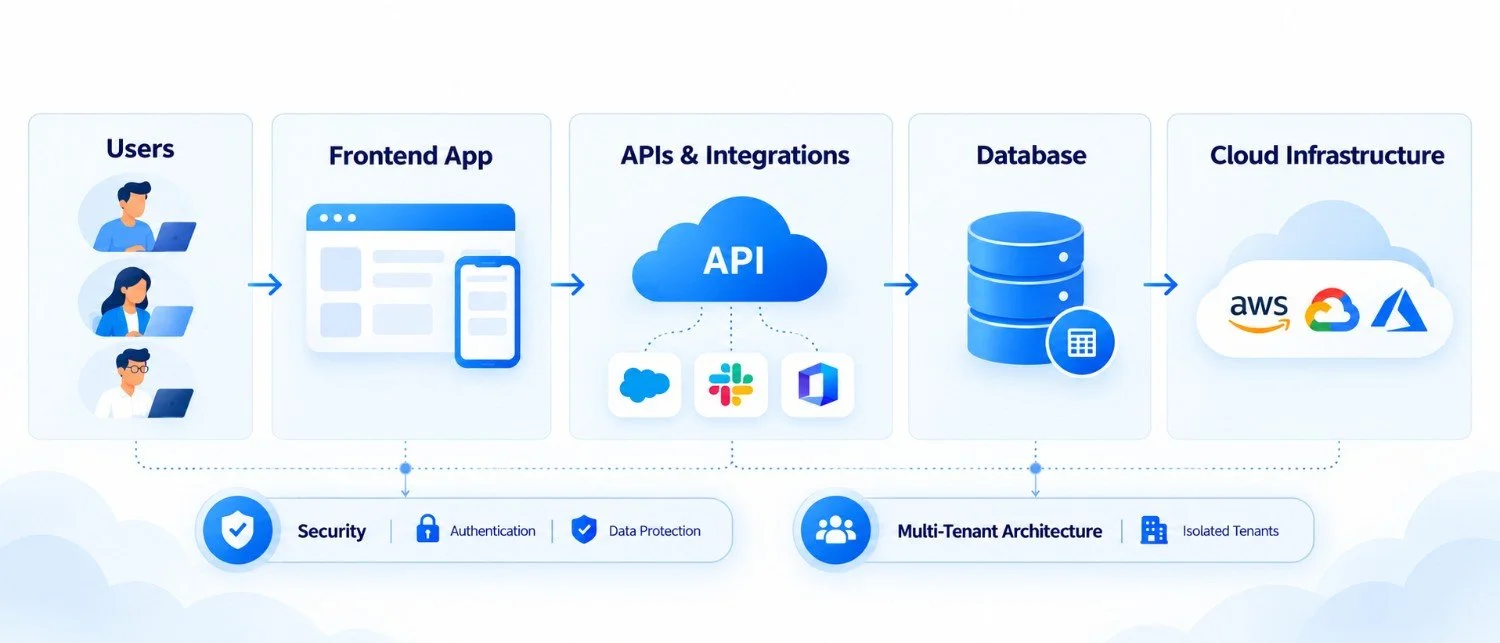
The basic process includes:
1. Cloud Hosting
The SaaS provider manages servers, databases, security systems, and application infrastructure. Customers do not need to install or maintain software locally.
2. Subscription Access
Businesses select a pricing plan based on their requirements. This model allows companies to start with essential features and upgrade as they grow.
3. Continuous Updates
Unlike traditional software, SaaS products receive regular improvements, security updates, and new features automatically.
4. Data Management and Integration
Modern SaaS applications often connect with other business tools through APIs and SaaS integration capabilities, allowing companies to create connected technology ecosystems.
5. Security and User Management
B2B SaaS platforms use authentication systems, access controls, and security measures to ensure that business data remains protected. Since multiple organizations may use the same application, providers must maintain strong security practices and separate customer data effectively.
B2B SaaS vs B2C SaaS: What Is the Difference?
Although both models use cloud-based software, they target different audiences and solve different problems.
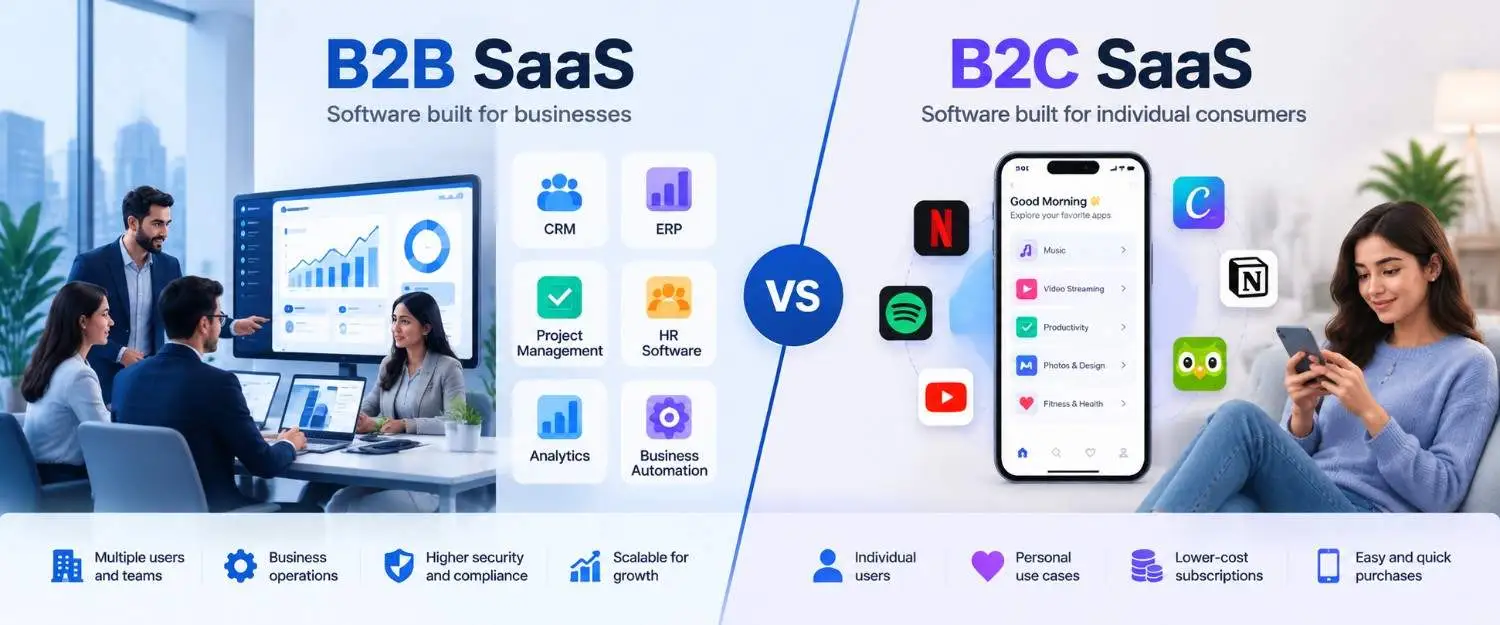
| Feature | B2B SaaS | B2C SaaS |
|---|---|---|
| Target users | Businesses and organizations | Individual consumers |
| Main purpose | Improve business operations and productivity | Personal convenience or entertainment |
| Buying decision | Usually involves teams and decision-makers | Usually individual purchase decisions |
| Pricing | Higher subscription plans with business features | Lower-cost consumer subscriptions |
| Examples | CRM, HR software, accounting platforms | Streaming apps, personal productivity tools |
B2B SaaS products usually require more customization, security, integrations, and scalability because businesses depend on them for critical operations.
Key Benefits of B2B SaaS for Businesses
Companies adopt SaaS platforms because they provide flexibility, efficiency, and long-term value.
Lower Initial Investment
Traditional software often requires significant upfront costs for licenses, hardware, and installation. SaaS products use subscription pricing, allowing businesses to access advanced technology with lower initial expenses.
Faster Implementation
Businesses can start using SaaS applications quickly without lengthy deployment processes. This helps organizations solve problems faster and adapt to changing market conditions.
Better Scalability
A scalable SaaS platform allows companies to add users, increase storage, and unlock additional features as their business grows.
For example, a startup may begin with a basic plan and later upgrade to enterprise features as its customer base expands.
Improved Remote Collaboration
Since SaaS applications are cloud-based, teams can access important tools and information from different locations. This supports remote and hybrid work environments.
Automatic Maintenance and Security Updates
The SaaS provider manages software updates, bug fixes, and security improvements, reducing the workload for internal IT teams.
Popular Examples of B2B SaaS Products
Many successful businesses rely on SaaS products to improve their daily operations.
- Customer Relationship Management (CRM): CRM platforms help companies manage leads, customer interactions, sales pipelines, and communication.
- Enterprise Resource Planning (ERP): ERP SaaS solutions help businesses manage finance, inventory, supply chains, and operations through a centralized platform.
- Marketing Automation Platforms: These tools help companies automate email campaigns, customer segmentation, lead nurturing, and performance tracking.
- Collaboration and Productivity Tools: Businesses use SaaS collaboration platforms for communication, document sharing, project management, and team coordination.
- Industry-Specific SaaS Solutions: Many companies now build specialized SaaS products for industries such as healthcare, real estate, logistics, education, and finance.
Important Features of a Successful B2B SaaS Platform
Building a successful B2B SaaS product requires more than just developing software functionality. A successful platform must provide a smooth user experience, protect business data, support scalability, and help organizations improve their daily operations.
The most important features of a successful B2B SaaS platform include:
User-Friendly Interface
A simple and intuitive interface helps users understand the platform quickly, reduces training requirements, and improves user adoption. Since businesses often have multiple teams using SaaS applications, a well-designed user experience is essential for long-term engagement.
Security and Data Protection
Security is one of the most important requirements for B2B SaaS applications because businesses handle sensitive customer, financial, and operational data. SaaS platforms should include strong security measures such as encryption, authentication, access controls, secure data storage, and compliance practices to protect user information.
Automation Capabilities
SaaS automation helps businesses reduce manual tasks, improve efficiency, and streamline repetitive workflows. Features such as automated notifications, reporting, data processing, and workflow management allow companies to save time and focus on higher-value activities.
Analytics and Reporting
Data-driven insights help businesses monitor performance, understand customer behavior, and make informed decisions. Modern SaaS platforms often include dashboards, reports, and analytics tools that help organizations track important metrics and identify improvement opportunities.
Third-Party Integrations
A modern B2B SaaS platform should connect easily with existing business tools through APIs and integrations. Integration capabilities allow companies to connect their SaaS applications with CRM systems, payment platforms, marketing tools, communication software, and other essential business solutions.
Mobile Accessibility
Mobile-friendly SaaS applications allow users to access important features and manage business tasks from different locations. Mobile accessibility supports remote teams and provides greater flexibility for modern organizations.
Multi-Tenant Architecture
Many B2B SaaS platforms use multi-tenant architecture, where a single software application serves multiple customers while keeping each customer's data separate and secure. This approach allows SaaS providers to improve scalability, optimize infrastructure costs, and efficiently manage growing numbers of users.
Subscription and Billing Management
SaaS platforms often require flexible billing systems that support subscription plans, invoices, payments, upgrades, and account management. Efficient billing management helps businesses maintain predictable revenue and provide a better customer experience.
How to Build a B2B SaaS Platform in 2026
Creating a successful B2B SaaS platform requires more than just writing code. Businesses need a clear strategy, understanding of customer needs, scalable technology, and continuous improvement to build software that delivers long-term value.
1. Identify a Business Problem
The first step is understanding the challenges businesses face and creating a solution that addresses a real need. Successful SaaS products focus on improving workflows, reducing operational problems, or helping companies achieve better results.
2. Research the Market
Before development begins, businesses should analyze their target audience, competitors, pricing models, and market demand. Proper research helps validate the idea and reduces the risk of building a product that customers do not need.
3. Define Core Features and Build an MVP
A minimum viable product (MVP) allows businesses to launch essential features, collect user feedback, and improve the platform based on real customer needs. Starting with core functionality helps reduce development costs and speeds up market testing.
Understanding the complete SaaS product development process helps businesses plan features, technology decisions, and long-term scalability before launching their platform.
4. Choose the Right Technology and Architecture
The technology stack plays an important role in a SaaS platform's performance, security, and scalability. Businesses should consider reliable frameworks, databases, cloud infrastructure, APIs, authentication systems, and scalable architecture to support future growth.
5. Focus on Security and User Experience
A successful SaaS platform must provide a simple user experience while protecting sensitive business data. Features such as secure authentication, access controls, data protection, and an intuitive interface help improve customer trust and adoption.
6. Test, Launch, and Continuously Improve
After development, thorough testing ensures the platform works reliably across different environments. Successful SaaS companies continuously monitor performance, collect customer feedback, and improve features to meet changing business requirements.
Businesses that need software tailored to their unique workflows often invest in custom software development to create scalable solutions that match their operational requirements.
B2B SaaS Development Process
Professional SaaS software development usually follows several stages:
Building a successful SaaS product requires expertise across architecture, frontend development, backend systems, APIs, security, and cloud deployment. A professional software development company can help businesses handle the complete SaaS development lifecycle, from planning and architecture to deployment and ongoing improvements.
- Discovery and Planning: Teams define goals, customer requirements, features, and technical strategy.
- UI/UX Design: Designers create interfaces focused on usability and customer experience.
- Development: Developers build the application, database structure, integrations, and security features.
- Testing: Quality assurance ensures the platform performs correctly across different devices and scenarios.
- Deployment and Maintenance: After launch, ongoing improvements, monitoring, and updates help maintain performance.
Businesses looking to create a reliable custom SaaS platform often work with experienced technology partners such as Zensol Technologies to develop scalable software solutions aligned with their business goals.
B2B SaaS Pricing Models Explained
SaaS companies use different pricing strategies based on their target customers, product complexity, and revenue goals. Choosing the right pricing model helps businesses attract customers while creating a scalable subscription-based revenue system.
Per User Pricing
Customers pay based on the number of users accessing the platform. This model is commonly used by CRM, project management, and collaboration tools because pricing grows as businesses add more team members.
Tiered Pricing
Companies offer multiple plans with different features, allowing customers to choose a package based on their requirements. Common examples include basic, professional, and enterprise plans.
Usage-Based Pricing
Customers pay according to their actual usage, such as API requests, storage capacity, transactions, or data processing. This model allows businesses to scale costs based on consumption.
Freemium Pricing
Some SaaS companies offer a free version with limited features to attract users. Customers can upgrade to paid plans when they need advanced functionality.
Enterprise Pricing
Large organizations often require customized pricing based on security requirements, integrations, user volume, and dedicated support. Enterprise SaaS plans usually include advanced features and tailored solutions.
Important B2B SaaS Metrics Businesses Track
Successful SaaS companies measure performance using specific metrics.
- Monthly Recurring Revenue (MRR): MRR shows predictable monthly subscription revenue.
- Annual Recurring Revenue (ARR): ARR measures expected yearly subscription income.
- Customer Acquisition Cost (CAC): CAC calculates how much a company spends to acquire a new customer.
- Customer Lifetime Value (CLV): CLV estimates the total revenue a customer generates during their relationship with the company.
- Churn Rate: Churn measures the percentage of customers who stop using the service over time.
Tracking these metrics helps SaaS companies improve growth strategies and customer retention.
Common Mistakes Businesses Make When Building SaaS Products
Many SaaS projects fail because businesses focus only on development instead of customer needs.
Common mistakes include:
- Building too many features before validating demand
- Ignoring user experience
- Choosing technology without considering scalability
- Underestimating security requirements
- Not planning customer onboarding
- Failing to analyze user feedback
Successful SaaS development requires balancing technology, business strategy, and customer experience.
Future B2B SaaS Trends in 2026
The SaaS industry continues to evolve with new technologies and changing business requirements.
AI-Powered SaaS
Artificial intelligence is becoming a core feature in SaaS platforms, helping businesses automate tasks, analyze information, and provide smarter recommendations.
Increased SaaS Automation
Companies are using automation to improve productivity and reduce operational complexity.
Industry-Specific Platforms
More businesses are adopting specialized SaaS solutions designed for specific industries and workflows.
Stronger Security Requirements
As businesses store more information in cloud platforms, cybersecurity and compliance will become even more important.
If your business is planning to build a scalable SaaS platform or needs expert guidance on software development strategy, you can contact Zensol Technologies to discuss your requirements.
Final Thoughts
B2B SaaS has become a powerful technology model that helps companies improve operations, reduce costs, and scale efficiently. By providing cloud-based software through flexible subscription models, SaaS platforms allow businesses to access advanced solutions without managing complex infrastructure.
From automation and analytics to industry-specific applications, the future of SaaS continues to expand. Businesses planning to build their own SaaS products should focus on solving real customer problems, creating scalable technology, and choosing the right development approach.
With the right strategy and technical expertise, a well-designed SaaS platform can become a valuable long-term asset for modern businesses.