The best SEO reporting tools help businesses track search visibility, organic traffic, keyword rankings, technical SEO, backlinks, and conversions in one reporting workflow. Some platforms provide complete SEO reporting software, while others specialize in analytics, crawling, competitor research, dashboards, or automated client reports.
In this guide, we compare 10 leading SEO reporting tools based on reporting capabilities, technical coverage, rank tracking, integrations, automation, pricing, and the type of business each platform suits best.
Quick Answer: What Are the Best SEO Reporting Tools in 2026?
The best SEO reporting tools in 2026 include Semrush for comprehensive SEO reporting, Ahrefs for backlink and competitor research, SE Ranking for agency workflows, Screaming Frog for technical SEO, AgencyAnalytics for client reporting, and Looker Studio for customizable dashboards. Google Search Console and Google Analytics 4 remain essential free sources for first-party search and conversion data.
Most businesses do not need a single platform. A stronger reporting stack usually combines first-party data, specialist SEO software, and a dashboard or reporting layer.
Best SEO Reporting Tools at a Glance
| Category | Recommended Tool |
|---|---|
| Best overall | Semrush |
| Best for backlinks | Ahrefs |
| Best for agencies | SE Ranking |
| Best for technical SEO | Screaming Frog |
| Best for client reporting | AgencyAnalytics |
| Best free search reporting | Google Search Console |
| Best conversion analytics | Google Analytics 4 |
| Best custom dashboard | Looker Studio |
| Best for smaller teams | Moz Pro |
| Best enterprise intelligence | Similarweb |
How We Evaluated These Tools
We evaluated the platforms across reporting depth, rank tracking, technical SEO capabilities, backlink analysis, dashboard flexibility, automation, integrations, scalability, AI-search visibility, and total cost.
We also considered how effectively each platform turns raw SEO data into information that marketers, executives, and clients can act on.
Where we had direct access to a platform, we reviewed its reporting workflow and available dashboards. For tools we did not test directly, we relied on current official product documentation, pricing information, and published feature specifications. Product capabilities and prices were last reviewed on August 1, 2026.
What Are SEO Reporting Tools and Software?
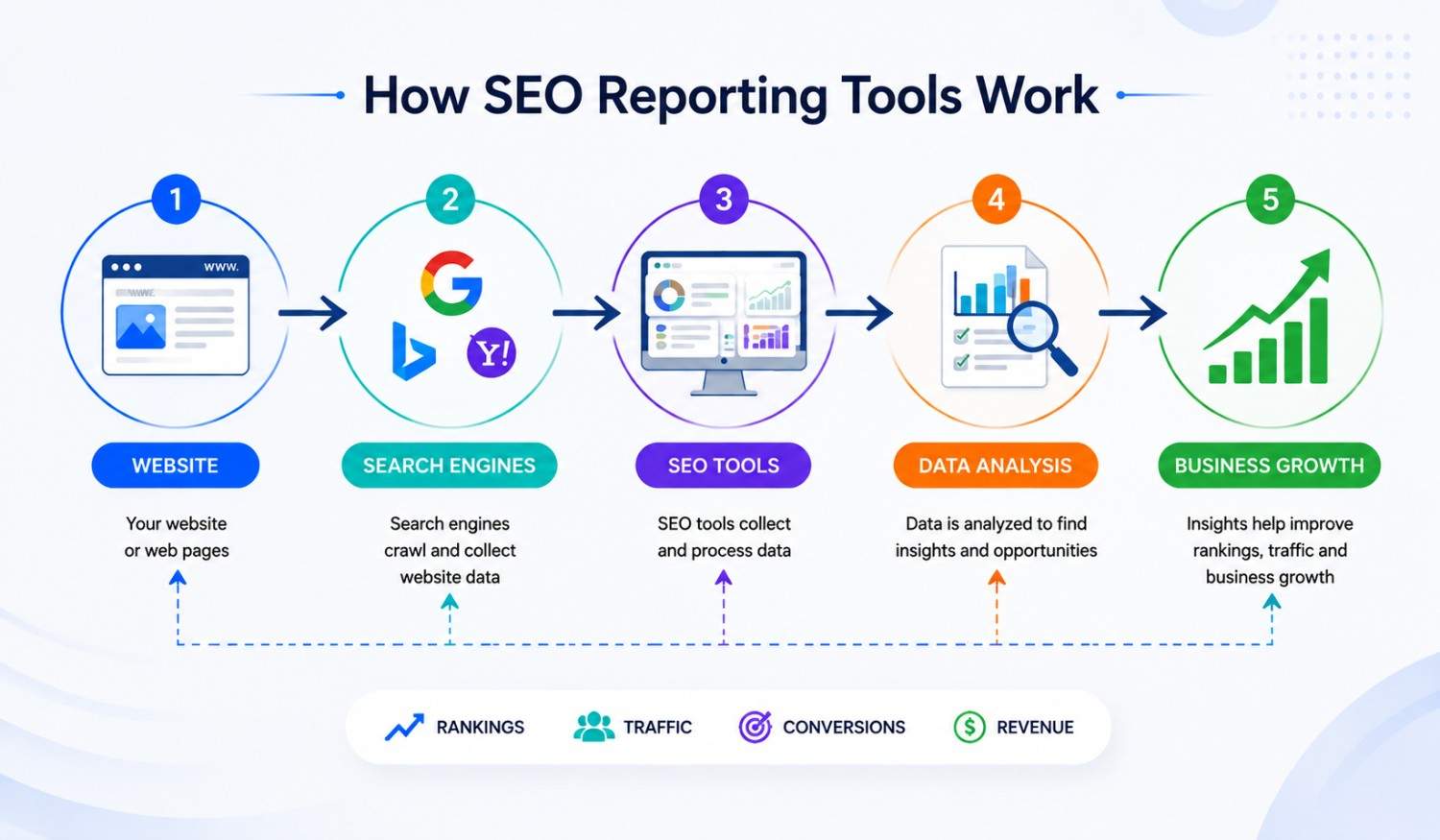
SEO reporting tools collect, organize, and present information about organic search performance. Depending on the platform, they may combine keyword rankings, Search Console data, website analytics, crawl findings, backlinks, competitor visibility, conversions, and AI-search metrics.
Some SEO reporting software collects proprietary data, while other platforms primarily visualize or automate information from connected sources. Semrush and Ahrefs, for example, provide their own SEO datasets, while Looker Studio is primarily a reporting and visualization layer.
Businesses use these tools to monitor visibility, diagnose performance changes, measure conversions, communicate results, and prioritize the next SEO actions.
SEO Reporting Tools vs. SEO Reporting Software
The terms overlap, but there is a useful distinction.
SEO analysis tools help marketers investigate rankings, backlinks, competitors, keywords, and technical issues. Ahrefs, Semrush, and Screaming Frog are strong examples.
SEO reporting software focuses more heavily on organizing metrics, creating dashboards, automating reports, and communicating results. AgencyAnalytics and Looker Studio are more reporting-oriented.
Many modern platforms do both. The right choice depends on whether your priority is analysis, reporting, or a combination of the two.
Why SEO Reporting Tools Matter
SEO reporting tools help businesses understand what is changing in organic search, why it is happening, and where action is needed. Rankings and traffic can shift because of technical problems, content updates, competitor activity, changing search demand, algorithm updates, or changes in search-result features.
The real value of reporting comes from connecting search visibility with business performance. For example, rising impressions with declining clicks can reveal weaker SERP performance or changing search intent. Growing organic traffic with flat conversions may indicate that the wrong pages are attracting visitors or that landing pages need improvement.
Regular reporting also helps teams spot problems before they become larger losses. Declining indexed pages, ranking drops, crawl issues, lost backlinks, or falling conversions can be identified, investigated, and prioritized based on their likely impact.
A useful SEO report should ultimately answer three questions: What changed? Why does it matter? What should we do next?
That is why reporting should extend beyond rankings and traffic. Connecting SEO performance with conversion rate optimization helps determine whether organic visitors are becoming qualified leads, customers, and revenue.
Key Features to Look for in SEO Reporting Software
Before choosing SEO reporting software, evaluate these eight capabilities.
Keyword Ranking Tracking
Look for location, device, language, historical trend, and SERP-feature reporting. Multi-market businesses also need separate views for branded and non-branded keywords.
Organic Traffic Analysis
Website traffic analysis should connect landing pages with engagement, leads, sales, and revenue. Search Console explains Google Search performance, while GA4 provides event-based behavior, attribution, and conversion reporting.
Technical SEO Monitoring
Technical monitoring should cover crawling, indexing, redirects, duplicate content, metadata, structured data, internal links, and Core Web Vitals. Good software prioritizes issues by likely impact.
Reporting data can also support a regular website content audit by identifying outdated, duplicated, underperforming, or poorly linked pages.
Backlink Analysis
Backlink reporting should include new and lost links, referring domains, anchor text, competitor gaps, and relevance. Link quantity alone is not a meaningful success measure.
Custom SEO Dashboards and Reports
Businesses may also need to combine SEO data with paid media, social media, and conversion metrics for broader digital marketing reporting.
Reporting Automation
SEO reporting software can reduce manual work through scheduled reports, recurring dashboard updates, alerts, and automated delivery. This matters most for agencies and larger teams that need to repeat the same reporting process across multiple websites or clients.
Integrations
Look for integrations with the platforms your reporting workflow already depends on, such as Google Search Console, GA4, Google Ads, CRM systems, ecommerce platforms, and BI tools. Strong integrations reduce manual exports and make it easier to connect SEO performance with leads, sales, and revenue.
AI Search Visibility
Some platforms now extend reporting beyond traditional search results by tracking brand mentions, citations, prompts, AI referrals, and competitor visibility across AI-assisted search experiences. These features are most useful for businesses actively measuring visibility in both search engines and AI discovery platforms.
SEO Reporting Tools & Software Comparison
Starting prices may vary by currency, billing cycle, limits, taxes, and add-ons.
| Tool | Best For | Rank Tracking | Technical SEO | Backlinks | Automated Reports | Dashboard | Free Option |
|---|---|---|---|---|---|---|---|
| Google Search Console | Search performance | Limited | Yes | Limited | Limited | Basic | Yes |
| Google Analytics 4 | Behavior & conversions | No | No | No | Yes | Yes | Yes |
| Semrush | All-in-one SEO | Yes | Yes | Yes | Yes | Yes | Limited |
| Ahrefs | Backlinks & research | Yes | Yes | Yes | Yes | Yes | Limited |
| Moz Pro | Smaller teams | Yes | Yes | Yes | Limited | Limited | No |
| SE Ranking | Agencies | Yes | Yes | Yes | Yes | Yes | No |
| Screaming Frog | Technical SEO | No | Excellent | No | Limited | Limited | Yes |
| Looker Studio | Custom dashboards | Via sources | Via sources | Via sources | Yes | Excellent | Yes |
| AgencyAnalytics | Client reporting | Via integrations | Via integrations | Via integrations | Excellent | Excellent | Trial |
| Similarweb | Market & competitor intelligence | Limited | No | Limited | Limited | Yes | Limited |
10 Best SEO Reporting Tools in 2026
1. Google Search Console: Best Free Search Data
Search Console is the foundation of Google organic-search reporting. It shows queries, pages, clicks, impressions, CTR, average position, indexing information, and Core Web Vitals.
Best for: First-party Google visibility.
Limitation: Minimal competitor data, and query tables omit some lower-volume information.
2. Google Analytics 4: Best for Conversions
GA4 reports what users do after reaching a website or app through acquisition, event, ecommerce, and conversion data. The standard version is free; Analytics 360 adds higher limits and enterprise support.
Best for: Behavior, attribution, and conversions.
Limitation: It does not replace rank tracking, crawling, or backlink research, and weak implementation produces unreliable reports.
3. Semrush: Best All-in-One SEO Reporting Tool
Semrush combines position tracking, site audits, backlink analysis, keyword research, competitor intelligence, and reporting in one broader SEO platform. This makes it a strong choice for teams that want to investigate performance and report on it without relying on several separate specialist tools.
Best for: Agencies and in-house SEO teams managing ongoing campaigns across rankings, technical SEO, competitors, content, and backlinks.
Why we recommend it: Semrush is most useful when reporting needs to connect several parts of SEO. If rankings decline, teams can investigate keyword movements alongside technical problems, competitor activity, and backlink changes within the same ecosystem.
What makes it different: Its main advantage is breadth. It supports both SEO analysis and ongoing reporting rather than focusing on only one reporting function.
Who should skip it: Small businesses that mainly need Search Console metrics, conversions, and a simple monthly dashboard may find the platform more extensive than necessary.
Semrush vs. Ahrefs: Choose Semrush when you want a broader all-in-one SEO workflow. Consider Ahrefs when backlinks, competitor analysis, and content research are your main priorities.
4. Ahrefs: Best for Backlink and Competitor Reporting
Ahrefs combines Site Explorer, Rank Tracker, Site Audit, competitive research, and Brand Radar, making it particularly useful when SEO reporting needs to explain why competitors are gaining visibility and where new opportunities exist.
Best for: SEO specialists, content teams, and businesses that prioritize backlinks, competitor research, and organic-search opportunities.
Why we recommend it: Ahrefs is strongest when reporting goes beyond simply showing ranking changes. Teams can use its data to investigate lost or gained backlinks, compare competitors, discover content gaps, monitor keyword performance, and understand changes in organic visibility.
What makes it different: Its value lies heavily in research and diagnosis. It helps explain the competitive factors behind SEO performance rather than acting only as a dashboard tool.
Who should skip it: Businesses whose primary need is white-label client dashboards or simple cross-channel monthly reporting may be better served by a dedicated reporting platform.
Ahrefs vs. Semrush: Choose Ahrefs when backlink intelligence and competitive SEO research matter most. Choose Semrush when you need a broader combination of SEO research, monitoring, and campaign reporting.
5. Moz Pro: Best for an Approachable Workflow
Moz Pro provides rank tracking, crawling, keyword research, link analysis, and custom reports in an accessible interface. Plans start at $49 monthly, with annual discounts.
Best for: Smaller teams that want guided SEO workflows.
Limitation: Keyword, crawl, and campaign limits may constrain larger portfolios.
6. SE Ranking: Best for Agency and Multi-Client SEO Reporting
SE Ranking combines keyword rankings, website audits, competitor research, backlinks, scheduled reports, and agency-focused functionality in one platform. That combination makes it particularly relevant to agencies that need both SEO execution and reporting across multiple projects.
Best for: Growing SEO agencies, consultants, and businesses managing multiple websites or client campaigns.
Why we recommend it: SE Ranking provides more than a reporting dashboard. Teams can monitor rankings, identify technical issues, research competitors, review backlinks, and turn those findings into recurring reports without moving between completely separate systems.
What makes it different: It sits between a specialist SEO platform and an agency reporting solution. That makes it useful for teams that want operational SEO features alongside client-facing reporting workflows.
Who should skip it: Businesses managing only one small website and requiring basic Search Console or GA4 reporting may not need its multi-project and agency-oriented capabilities.
7. Screaming Frog SEO Spider: Best Technical Crawler
Screaming Frog audits links, redirects, metadata, directives, duplicates, structured data, and other technical elements. The free version crawls 500 URLs, while the paid licence adds more advanced crawling, integrations, scheduling, and extraction capabilities.
Best for: Technical SEO audits, migrations, and diagnosing crawl-related problems.
Why we recommend it: Screaming Frog is particularly useful when performance problems require page-level technical investigation. It can reveal broken links, redirect chains, duplicate metadata, crawl restrictions, internal-link issues, and other problems that may not be obvious in high-level reporting dashboards.
What makes it different: It is primarily a technical diagnostic tool rather than a general SEO reporting platform. Its strength is detailed crawl data, making it especially valuable alongside Search Console and GA4.
Limitation: It does not replace rank tracking, competitor research, traffic analytics, or executive dashboards.
8. Looker Studio: Best Custom Dashboard Builder
Looker Studio creates customizable reports using data from sources such as Google Search Console, GA4, Sheets, and BigQuery. It is best viewed as a reporting and visualization layer rather than a standalone SEO research platform.
Best for: Custom SEO dashboards, management reporting, and combining multiple data sources.
Why we recommend it: Looker Studio gives teams greater control over which SEO metrics are displayed and how they are presented. It can bring search visibility, traffic, conversions, and other marketing data into one dashboard instead of requiring stakeholders to check several platforms separately.
Who should use it: Businesses, agencies, and analytics teams that already have reliable SEO data but need a clearer way to present it to clients, managers, or executives.
Limitation: Dashboard quality depends on the connected data sources, setup, and reporting expertise.
9. AgencyAnalytics: Best for Client Reporting
AgencyAnalytics focuses on recurring client reporting through automated reports, white-label dashboards, client portals, and integrations with other SEO and marketing platforms.
Best for: Agencies managing reporting across multiple clients.
Why we recommend it: AgencyAnalytics can reduce the manual work involved in collecting metrics from several platforms and rebuilding similar client reports every month. Its strength is turning connected marketing and SEO data into consistent, client-friendly dashboards and automated reports.
AgencyAnalytics vs. SE Ranking: Choose AgencyAnalytics when client dashboards, white-label reporting, and automation are the main priorities. Choose SE Ranking when you also need stronger built-in SEO execution features such as rank tracking, audits, competitor research, and backlink analysis.
Limitation: Deeper SEO research still depends on specialist tools or connected platforms.
10. Similarweb: Best for Market and AI Intelligence
Similarweb provides competitor traffic estimates, channel benchmarks, audience insights, AI visibility, prompt analysis, citations, sentiment, and AI referral intelligence. AEO Intelligence starts at $99 monthly with annual billing.
Best for: Enterprise market and competitor analysis.
Limitation: Estimates should inform comparisons, not replace first-party analytics.
Best Free SEO Reporting Tools & Software
Businesses do not always need paid SEO reporting software to build a useful reporting system. A strong free setup can combine several specialized tools.
Google Search Console provides first-party search visibility and indexing data, while Google Analytics 4 adds traffic, engagement, and conversion reporting. Looker Studio can combine those sources into customizable dashboards, and the free version of Screaming Frog can support technical crawling for smaller websites.
Recommended free SEO reporting stack: Google Search Console + GA4 + Looker Studio. Add Screaming Frog when technical crawling is required.
Paid software becomes more valuable when teams need advanced rank tracking, backlink analysis, competitor intelligence, white-label reporting, or multi-client automation.
Best SEO Reporting Tools by Business Type
Small Businesses
Start with Google Search Console + GA4 + Looker Studio for search performance, conversions, and simple dashboards. Add Moz Pro or SE Ranking only when you need deeper rank tracking and audits.
Agencies
Use AgencyAnalytics for client dashboards and automated reporting, SE Ranking for multi-client SEO workflows, or Semrush when you need broader SEO research and campaign management.
In-House SEO Teams
A strong setup is Semrush or Ahrefs + Search Console + GA4. This gives teams competitor research, backlinks, keyword tracking, first-party search data, and conversion insights.
Technical SEO Teams
Use Screaming Frog + Google Search Console + GA4. This combination covers crawling, indexing, technical issues, search visibility, and post-click performance.
Enterprise Companies
Enterprise teams usually need a broader stack: Semrush or Ahrefs + Search Console + GA4 + Similarweb + a BI/reporting layer. Prioritize scalability, integrations, automation, permissions, and multi-market reporting.
How to Choose the Right SEO Reporting Tool
Business Goals
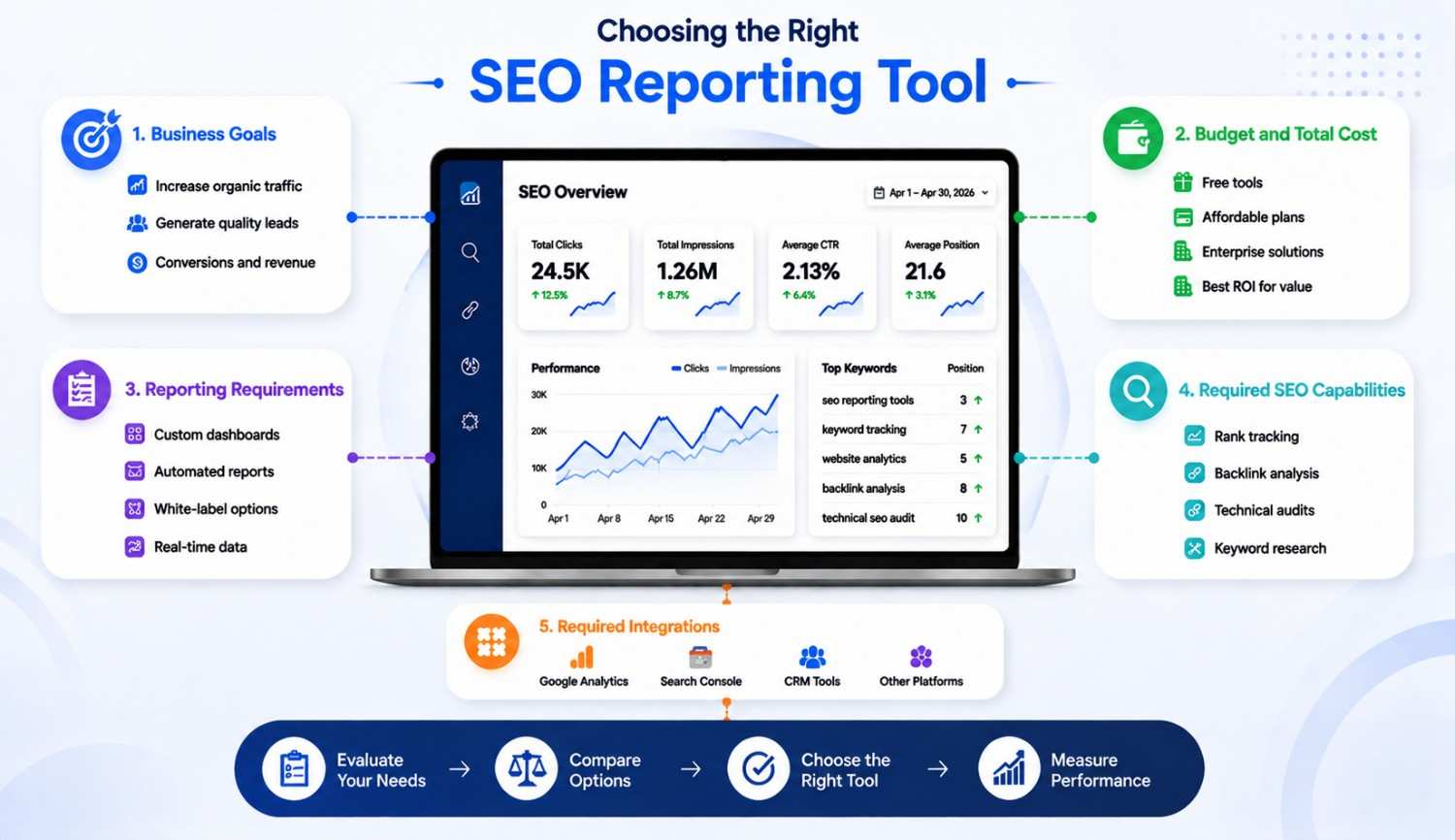
Choose around the decision you need to make. Rankings require position tracking, website health requires crawling, conversion analysis requires configured analytics, and AI visibility requires prompt, mention, and citation data.
Budget and Total Cost
Count users, projects, keywords, crawl credits, reports, APIs, AI add-ons, white labeling, and billing commitments, not just the advertised subscription.
Reporting Requirements
SEO specialists need diagnostic detail. Executives need trends, financial impact, and recommended actions. Clients need transparent progress, context, and consistent delivery.
Team Size and Skill Level
Small teams may prefer Moz Pro or SE Ranking. Analytics teams may value Looker Studio’s flexibility, while agencies may save time with AgencyAnalytics.
Required Integrations
Check connections with Search Console, GA4, advertising platforms, CRM and ecommerce systems, data warehouses, and project tools. Choose the smallest stack that reliably answers the organization’s real questions.
Small Businesses
Reporting insights should support broader website optimization by connecting technical performance, content quality, user experience, and conversions.
Which SEO Reporting Tool Should You Choose?
There is no single best SEO reporting tool for every business. Semrush is a strong all-in-one option, Ahrefs excels at backlink and competitor research, Screaming Frog is better suited to technical SEO, and AgencyAnalytics focuses on automated client reporting. Businesses that need custom dashboards can combine Google Search Console, GA4, and Looker Studio.
Most businesses ultimately need a stack: first-party data for truth, specialist software for diagnosis, and a dashboard for communication. The right setup should make it easier to understand performance, identify problems, and prioritize the actions most likely to improve organic results.
ZensolTech helps businesses connect Search Console, GA4, technical SEO findings, and conversion data into clear SEO reporting systems built around actionable business insights.
Need help choosing or building the right reporting setup? Request an SEO consultation with ZensolTech.